A Seated Liberty Half Dollar may look like an old silver coin, but its value can go well beyond the metal it contains. Some examples are common enough to interest collectors at modest prices, while scarce dates, mint marks, and high-grade coins can be worth considerably more.
If you have one tucked away in a collection or inherited from a family member, understanding what affects Seated Liberty Half Dollar value is a good place to start.
What Is a Seated Liberty Half Dollar?
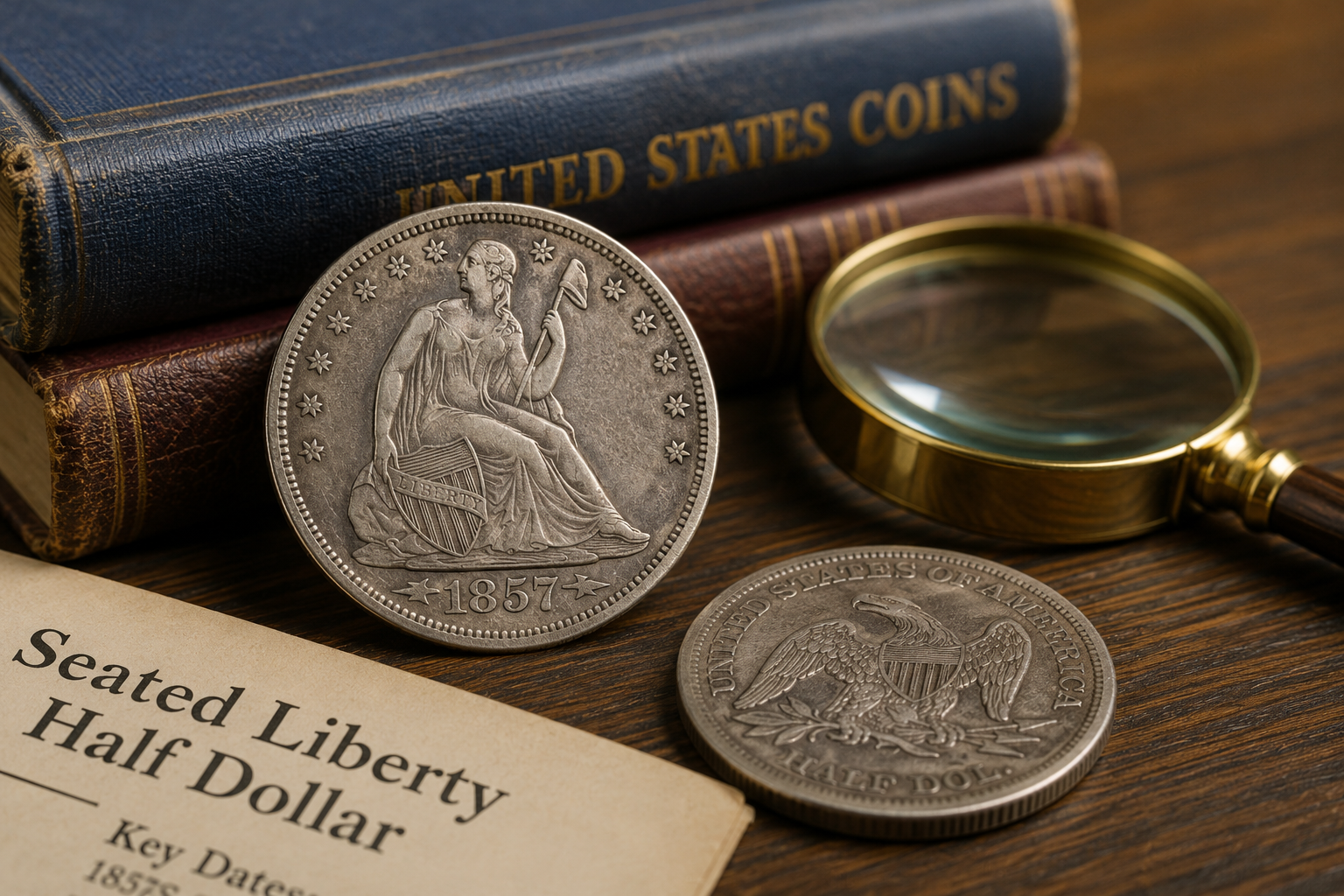
The Seated Liberty Half Dollar was minted in the U.S. from 1839 to 1891 and designed by Christian Gobrecht. It features Liberty seated on a rock on the front and an eagle on the reverse.
The series includes several design changes, including versions with arrows, rays, and the IN GOD WE TRUST motto. These differences can affect a coin's collector value.
How Much Silver Is in a Seated Liberty Half Dollar?
 Seated Liberty Half Dollars were made from 90% silver and 10% copper throughout the series. Their weight changed over time:
1839–1853: 13.36 grams
1853–1873: 12.44 grams
1873–1891: 12.50 grams
The 1853 weight reduction was marked by arrows around the date, while arrows were used again in 1873 and 1874 when the weight increased slightly.
That silver content gives every genuine coin a baseline bullion value. However, collectors often value these coins for much more than their silver alone.
What Determines Seated Liberty Half Dollar Value?
There is no single price for every Seated Liberty Half Dollar. The value of an individual coin depends on several details.
Date and Mint Mark
The year is one of the first things collectors check. A mint mark can make an even bigger difference.
Coins were struck at Philadelphia, New Orleans, San Francisco, and Carson City. Philadelphia coins generally have no mint mark, while branch-mint coins can carry an O, S, or CC on the reverse below the eagle.
Some dates and mint combinations are much harder to find than others, which can increase collector demand.
Condition
Condition can have a major effect on Seated Liberty Half Dollar value.
A heavily circulated coin may show significant wear on Liberty and the eagle. An uncirculated example can retain much more of its original detail and surface quality.
Professional grading can help establish a coin's condition consistently. PCGS price data shows substantial differences between lower-grade and mint-state examples within the series.
Rarity and Varieties
Some Seated Liberty Half Dollars are desirable because relatively few examples survive today. Others are collected for specific design varieties.
The 1853 Arrows and Rays half dollar, for example, is a distinct one-year type. Certain Carson City issues are also particularly scarce.
This is where a seemingly ordinary old half dollar can become much more interesting to a collector.
What Should You Check on Your Coin?
Before trying to estimate the value of your Seated Liberty Half Dollar, look closely at the coin.
Check these details:
Date: Find the year at the bottom of the obverse.
Mint mark: Look below the eagle on the reverse.
Design: Note arrows, rays, or the presence of the motto.
Condition: Look for wear, scratches, cleaning, or damage.
Weight: Different periods had different standard weights.
Silver content: The series is 90% silver, but collectible value may be well above its melt value.
Avoid cleaning an old coin to make it look newer. Cleaning can damage its original surfaces and may reduce its appeal to collectors.
Frequently Asked Questions
How old is a Seated Liberty Half Dollar?
The series was minted from 1839 to 1891, covering more than five decades of U.S. coin production.
Is a Seated Liberty Half Dollar made of real silver?
Yes. The series was made from 90% silver and 10% copper.
What makes a Seated Liberty Half Dollar valuable?
The date, mint mark, condition, rarity, design variety, and silver content can all affect its value.
Should I clean my Seated Liberty Half Dollar?
No. Cleaning can alter the coin's original surface and potentially hurt its collector appeal.
Finding the Value of Your Seated Liberty Half Dollar
The silver in a Seated Liberty Half Dollar gives it a tangible starting point, but the real value of a particular coin can depend on details that are easy to overlook.
If you have an old half dollar, check the date, mint mark, design, and condition before assuming it is worth only its silver content. A professional evaluation can help determine what kind of coin you have and give you a clearer picture of its current market value.
This content is provided by Pacific Precious Metals for educational purposes only and is not financial or tax advice. Precious metals carry risk, including possible loss of principal, so please consult a licensed advisor before investing.