Is a silver plate worth anything? Sometimes, but its value usually comes from factors other than the silver itself. Silver-plated items have a thin layer of silver over another metal, which means their precious-metal value is generally low.
However, the maker, pattern, condition, and item type can still matter to collectors and buyers.
This guide explains the metal value of silver plate, what can make certain pieces more desirable, and what to expect when a dealer tests your items.
Silver Plate Metal Value: What to Expect
Silver plate has a thin silver coating over a base metal. Most of a plated item's weight comes from the metal underneath, not the silver on its surface. This is why silver plate generally contains far less precious metal than sterling silver, which is 92.5% silver throughout.
As a result, silver plate's scrap value is usually low. Even a heavy tray or a complete set of forks may contain only a small amount of silver. Testing helps determine the actual metal content, so you don't have to rely on guesswork.
This is especially important when dealing with inherited sets. A heavy, polished collection may look valuable, but much of its weight can come from the base metal.
Understanding this difference beforehand helps set realistic expectations and makes it easier to identify pieces that may attract more interest.
Is Silver Plate Worth Anything? What Collectors Look For
Silver-plated items can have decorative or collectible value even when their silver content is low. Buyers and collectors generally consider several factors when assessing these pieces:
Maker and Pattern: Recognized manufacturers and sought-after patterns can attract buyers.
Condition: Dents, deep scratches, and worn plating can reduce a piece's appeal.
Completeness: A full, matching set often attracts more interest than individual pieces.
Design: Detailed craftsmanship and unusual shapes can make an item stand out.
Age and Rarity: Older doesn't always mean more valuable. Scarcity and buyer demand matter more.
Which Silver-Plated Items Are Most Likely to Have Value?
Some silver-plated items are easier to sell than others. Understanding the type of piece you own can help you set realistic expectations before bringing it in for an evaluation.
Flatware Sets
A complete, matching flatware set in good condition has a stronger chance of attracting interest. Silver-plated flatware has a thin silver layer over another metal, so its precious-metal value is generally lower than that of sterling silver flatware. Any additional value usually depends on the pattern, maker, and number of pieces remaining in the set.
Tea Sets, Trays, and Serving Pieces
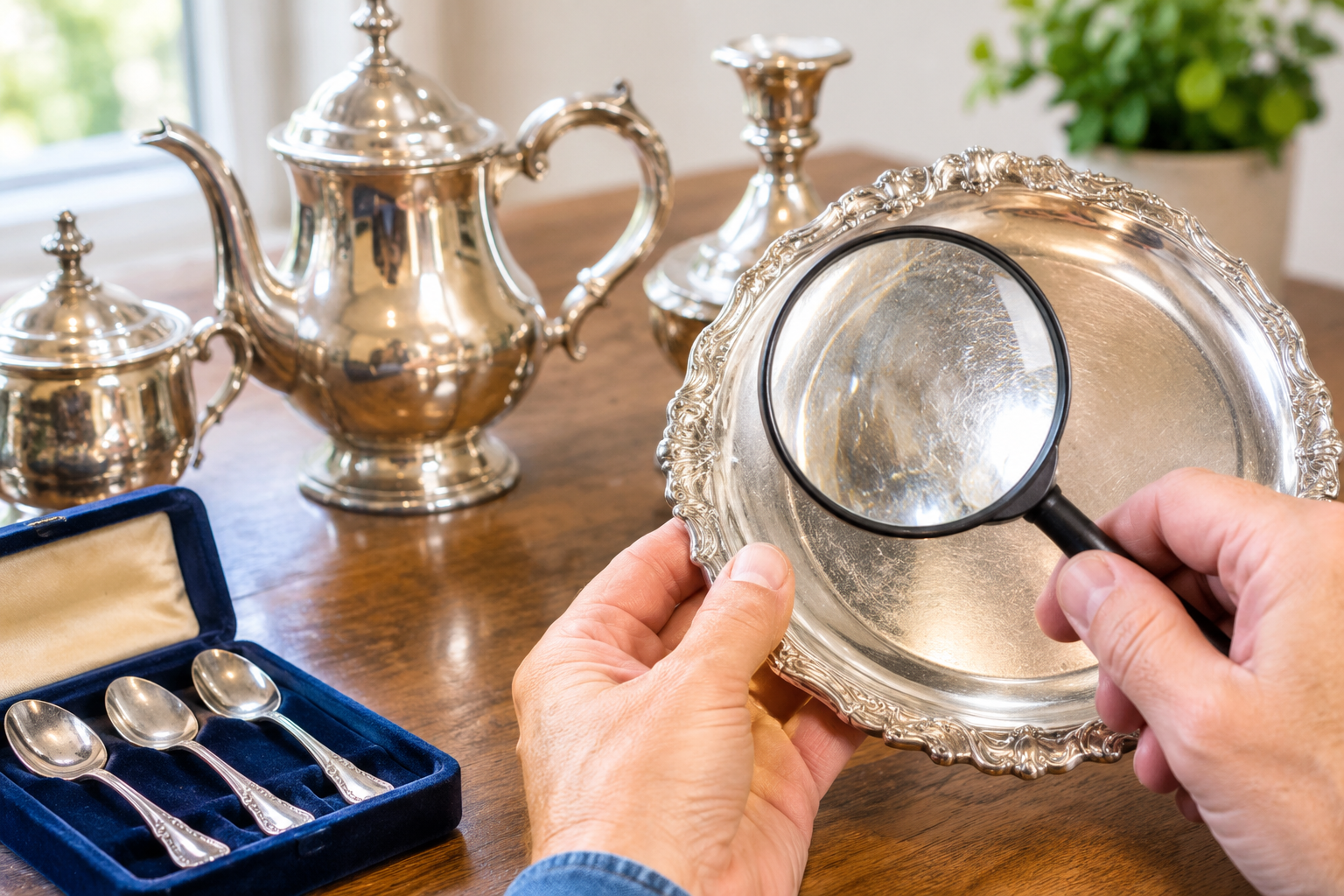
Larger decorative items, often called holloware, may appeal to buyers because of their design and display value. Dents, repairs, and worn plating can affect their appeal, as the larger surface makes these flaws easier to notice. Common individual pieces generally attract less interest than distinctive designs.
How to Check What You Have Before Selling
Start by turning each piece over and checking for stamps or markings. Sterling silver is usually marked Sterling, 925, or .925, while items marked Silverplate or EP are plated. Older markings may have worn down, so good lighting and a magnifying glass can help.
If the markings are missing or unclear, don't assume the item is sterling silver. Avoid aggressive polishing, too, as it can remove surface details and affect the markings. A dealer can test the item in its current condition and confirm its composition.
Sorting your items before visiting a dealer can also make the process easier. Keep marked sterling silver in one group, marked silver-plated pieces in another, and items with unclear markings in a third. Bring the complete collection, including serving pieces, so everything can be evaluated during the same visit.
What to Expect When a Dealer Tests Your Silver
Pacific Precious Metals uses X-ray fluorescence analysis to identify the metals in an item and determine their percentages. The items are weighed using government-certified scales. Testing a few items usually takes 5 to 10 minutes.
If an item tests as mostly base metal, its metal value is likely to be minimal or nonexistent. Pacific Precious Metals has four Bay Area stores in Sausalito, Palo Alto, Fremont, and Walnut Creek where you can buy, sell, and appraise precious metals.
Frequently Asked Questions
Can I sell silver-plated flatware for scrap?
You can have silver-plated flatware tested, but its scrap value is usually low. Silver plate generally contains much less silver than sterling flatware. The maker, pattern, and condition may still matter to collectors.
Does silver plate have any resale value?
Yes, some silver-plated items have resale value depending on their maker, pattern, condition, and whether they belong to a complete set. Collectible value is separate from the silver content, which is usually small.
Should I polish silver plate before selling it?
Avoid aggressive polishing before selling. Heavy polishing can remove surface details and affect markings. A dealer can examine the items in their current condition and assess their metal content and appearance.
Does Pacific Precious Metals test silver items?
Yes. Pacific Precious Metals uses X-ray fluorescence testing and certified scales to evaluate silver items. The team explains the results throughout the process.
What to Do With Your Silver-Plated Pieces
Is silver plate worth anything? It can be, but its value often depends more on the maker, pattern, and condition than on the silver itself. Check the markings, avoid heavy polishing, and have items with unclear markings tested before deciding what to do with them.
Bring your items to any of Pacific Precious Metal’s Bay Area stores for testing.
Disclaimer: This content is provided by Pacific Precious Metals for educational purposes only and is not financial or tax advice. Precious metals carry risk, including possible loss of principal, so please consult a licensed advisor before investing.