What sets 14k gold apart from 18k gold? The key difference in 14k vs 18k gold is purity. 14k gold contains 58.3% pure gold, while 18k gold contains 75%. So, each is a different choice in terms of durability, appearance, and price.
The remaining percentage consists of alloy metals such as silver, copper, nickel, or zinc. This difference in composition affects the gold's color, durability, and value.
Understanding these differences can help you choose jewelry for everyday wear or estimate its worth before selling.
How Karats Measure Gold Purity
The karat system shows what fraction of 24 parts is pure gold; since pure 24k gold is almost 100% gold, it is too soft for most jewelry, so manufacturers add other metals to increase its strength.
You can calculate the percentage with a simple formula: divide the karat number by 24. For 14k gold, that is 14 divided by 24, which equals 58.3%. With 18k gold, the figure is 18 divided by 24, or 75%. The rest of the mixture is alloy metal, and this alloy gives the finished item its color.
Features | 14K Gold | 18K Gold |
Pure Gold | 58.3% | 75% |
Alloy Metal | 41.7% | 25% |
Common Stamps | 14K, 14KT, 585 | 18K, 18KT, 750 |
Feel | Harder | Softer |
14k vs 18k Gold Value: What You Get Per Gram
Value starts with gold content. A 10-gram piece holds 5.83 grams of pure gold in 14k (10 × 0.583) and 7.5 grams in 18k (10 × 0.75). That makes 18k about 29% richer in gold at the same weight.
Resale follows the same logic. A buyer who buys for metal content pays for the pure gold inside the piece, not just the karat number. Retail jewelry prices can also include design, brand, labor, and stones, so a ring's tag may not match its metal value.
Durability: Which Karat Holds Up Better?
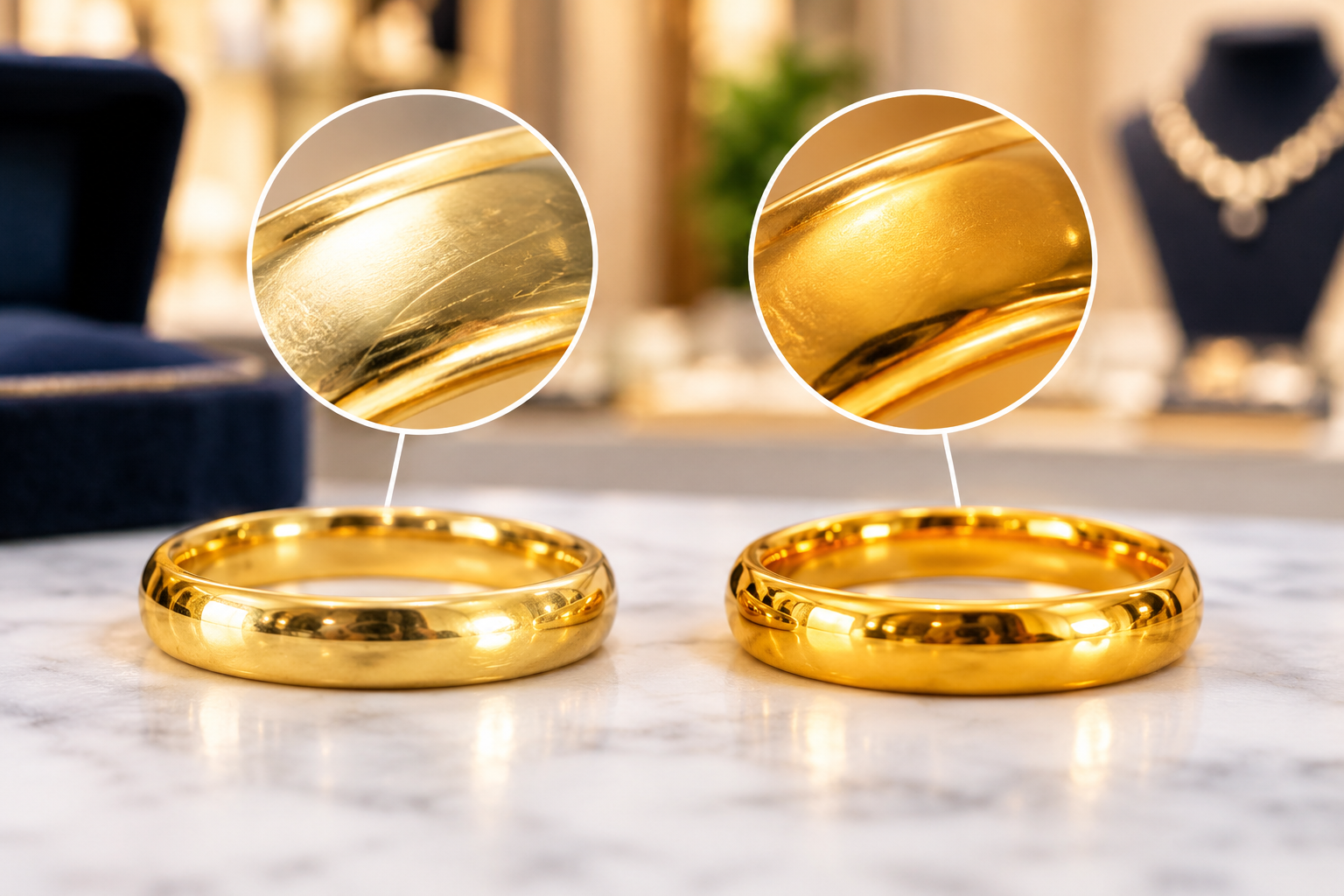
14k gold is a better choice for everyday wear because its higher alloy content helps prevent dents, scratches, and bent prongs. This makes it ideal for engagement rings, bracelets, and other items worn daily.
18k gold is softer because it contains a higher amount of pure gold; it can endure for a long time, but it shows signs of wear more quickly. An extremely thin 18k band on a hand that uses tools may lose its shape more quickly than a 14k band of the same width.
Color and Skin Comfort Differences
18k gold has a more intense, richer yellow color because gold makes up three-quarters of the metal; 14k gold appears lighter, and the alloy mix determines the precise shade; white gold and rose gold follow the same karat rule, but their colors come from different alloys.
Skin comfort can differ too. Alloys such as nickel can irritate some people, and 18k contains less alloy than 14k. If you have a metal sensitivity, ask the seller what the alloy contains before you buy.
How to Check Whether Jewelry Is 14k or 18k Gold
Start with the stamp. Look near the clasp or inside the band for 14K, 14KT, or 585 on 14k gold, and 18K, 18KT, or 750 on 18k gold. Stamps can wear down or go missing, so they are a starting point, not proof.
Testing gives a clearer answer. At Pacific Precious Metals, we use X-ray fluorescence analysis to identify the metals in a piece and their percentages. We also weigh items in front of you on government-certified scales, so you can see how the value is calculated.
Which Karat Should You Choose?
The right karat depends on how you plan to use the piece:
Daily wear rings and bracelets: 14k gold offers more strength.
Special-occasion jewelry: 18k gold offers deeper color and more gold.
Gifts and heirlooms: either works, but 18k suits pieces worn gently.
Karat doesn't always win. Consider how often you'll wear it, how much you'll handle it, and whether you value gold content or durability more. If the item is valuable, a GIA-certified gemologist can assess it and provide documentation of its replacement value for insurance purposes.
Selling 14k or 18k Gold Jewelry
If you plan to sell, base your pricing on purity, since an 18k chain and a 14k chain of the same weight contain different amounts of gold and must be tested and priced separately. Mixed batches with multiple karats are common, especially in estates.
Pacific Precious Metals buys jewelry for its precious metal content, so condition, brand, and design don't affect the metal calculation.
Frequently Asked Questions
Is 18k gold better than 14k gold?
Neither is better in every case. 18k gold has more pure gold and a richer color, while 14k gold is harder and better suited to daily wear.
Which karat is worth more?
Per gram, 18k gold is worth more because it is 75% gold compared with 58.3% for 14k. The total value still depends on each piece's weight.
Does 18k gold scratch more easily than 14k gold?
Yes, it usually does. The higher gold content makes 18k softer, so it shows scratches and dents sooner than 14k.
How can I tell if my ring is 14k or 18k gold?
Check the inside of the band for stamps such as 14K, 585, 18K, or 750. If the mark is unclear, a dealer can confirm purity through testing.
Choosing the Right Karat for Your Gold
The 14k vs 18k gold choice depends on purity, strength, and purpose. 18k gold holds more gold and shows a richer color. 14k gold stands up better to daily wear.
Before you buy or sell, check the stamp, weigh the piece, and confirm the purity with testing. To get your jewelry checked, visit a Pacific Precious Metals store in the Bay Area or call today.
Disclaimer: This content is provided by Pacific Precious Metals for educational purposes only and is not financial or tax advice. Precious metals carry risk, including possible loss of principal, so please consult a licensed advisor before investing.