You find an old gold ring, chain, or bracelet and start wondering if it is actually gold. Before taking it to a buyer, a few simple checks can give you useful clues.
Learning how to test gold jewelry at home can help you identify karat markings, signs of plating, and other details about a piece. These checks are a starting point, not a replacement for professional testing.
Start With the Hallmark
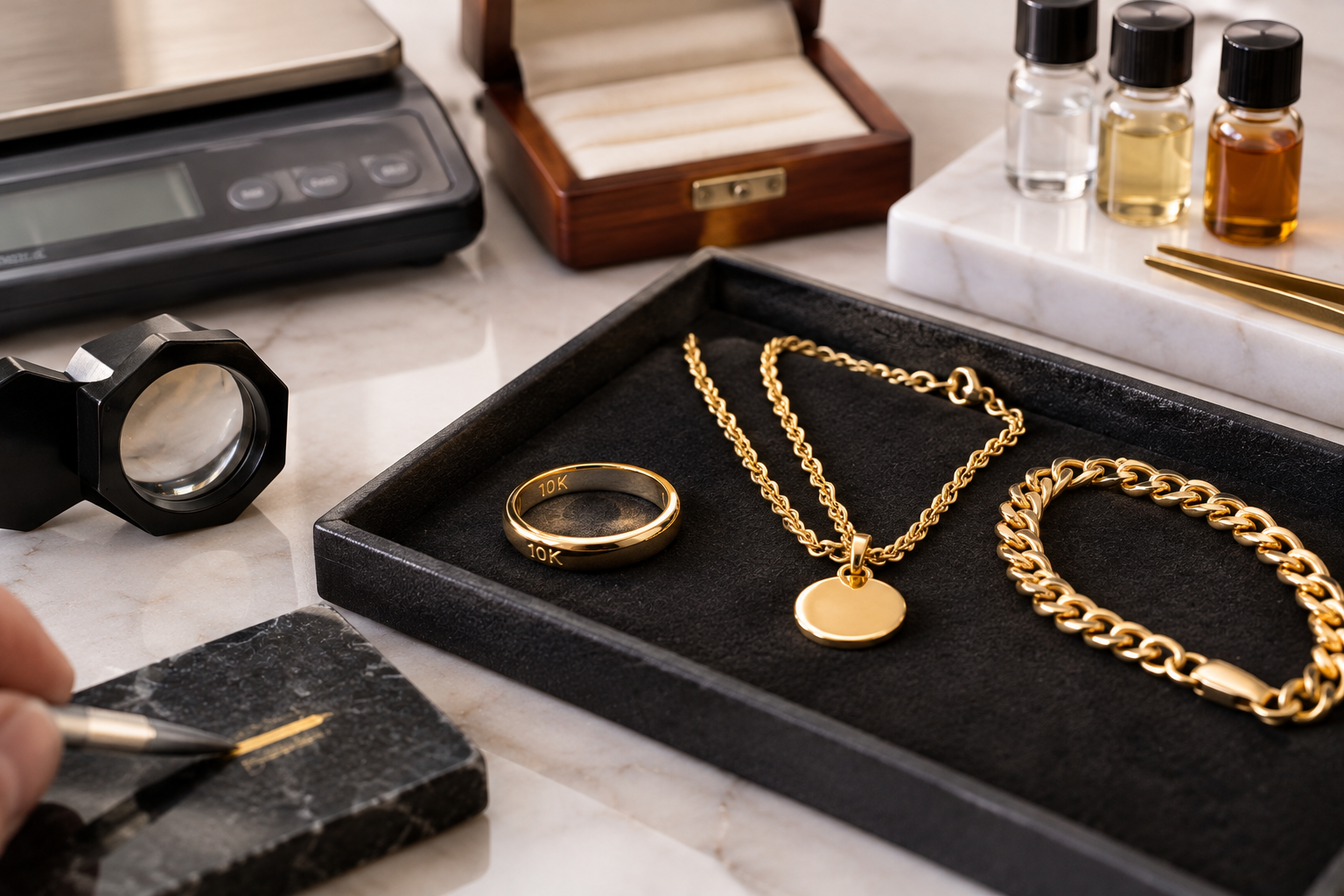
Look for a hallmark or karat stamp inside a ring, near a clasp, or on the back of a pendant.
Common markings include:
10K: 41.7% gold
14K: 58.3% gold
18K: 75% gold
22K: 91.7% gold
24K: Nearly pure gold
A karat mark shows the proportion of gold in the alloy. For example, 14K gold contains 14 parts gold out of 24.
You may also see markings such as "GP," which can indicate gold plating. A stamp is useful information, but don't treat it as final proof because markings can wear off or be inaccurate.
Try the Magnet Test
Gold is not magnetic, so a strong reaction to a magnet can be a warning sign. Place a strong magnet close to the jewelry. If the piece is noticeably attracted to it, it may contain a magnetic base metal.
A lack of attraction does not prove the jewelry is gold. Many other metals are also non-magnetic, so use the magnet test only as a basic screening step.
Look for Signs of Plating
Examine the jewelry under good lighting, especially around areas that receive regular friction.
Check the:
Edges and corners
Ring bands
Clasp areas
Raised surfaces
Scratches and worn spots
If the yellow-gold surface has worn away and another color appears underneath, the piece may be plated.
Can Weight Tell You If Gold Is Real?
Weight can provide another clue, but it cannot confirm gold purity.
Gold is dense, so a solid piece may feel heavier than similarly sized jewelry made from lighter metals. However, gemstones, hollow sections, clasps, and other materials can affect the total weight.
Use weight as supporting information. It cannot tell you the karat or exact gold content.
How Professional Gold Testing Works
Home checks can provide clues, but professional testing gives you a much clearer picture of the metal.
Pacific Precious Metals uses X-ray fluorescence (XRF) testing to analyze precious-metal content and weighs items on certified scales during evaluation.
This matters because a 14K piece contains gold alloyed with other metals, while a plated item may have only a thin gold coating over another material. Testing helps determine the actual metal composition instead of relying only on appearance or a stamp.
A Simple Check Before You Sell
Before taking your jewelry to a buyer:
Find the hallmark and note the karat marking.
Try a magnet as a basic screening step.
Inspect worn areas for another metal underneath.
Check the weight for another useful clue.
Get professional testing to determine the actual metal composition.
The goal of how to test gold jewelry at home is to gather useful information before getting a professional evaluation, not to determine an exact selling price yourself.
Frequently Asked Questions About Testing Gold Jewelry
Can I test gold jewelry at home without damaging it?
Yes. Hallmarks, magnets, visual inspection, and weight checks are non-destructive. None can confirm gold purity on its own.
Does a magnet test prove gold is fake?
No. Gold is not magnetic, but many non-gold metals are also non-magnetic. A magnet test provides a clue, not a final answer.
Is a 14K stamp proof that jewelry is real gold?
A 14K stamp indicates a claimed purity of 14 parts gold out of 24, but the marking itself does not verify the composition. Professional testing is more reliable.
Should I test inherited jewelry at home?
You can perform simple visual checks, but avoid scratching or chemically testing pieces with sentimental, antique, or collectible value.
Can I sell gold jewelry after testing it at home?
Yes, but a home test does not establish the final metal content. Professional testing can determine what metals are actually present before you sell.
Ready to Sell Your Gold Jewelry?
Home tests can help you understand what you have, but professional testing provides a clearer picture of the metal content.
If you are ready to sell gold jewelry, learn more about Cash for Gold or visit Pacific Precious Metals at one of its Bay Area locations.
Disclaimer: This content is provided by Pacific Precious Metals for educational purposes only and is not financial or tax advice. Precious metals carry risk, including possible loss of principal, so please consult a licensed advisor before investing.