Sterling silver and white gold can look almost identical. However, they differ in composition, markings, weight, care, and resale value. A ring, chain, or pair of earrings could be made from either metal, and appearance alone may not be enough to tell them apart.
This guide explains the sterling silver vs white gold differences in simple terms and covers a few checks you can try at home. It also explains when professional testing may help U.S. jewelry owners who want to sell, insure, or appraise their pieces.
Sterling Silver vs White Gold: What Each Metal Is Made Of
Sterling silver is 92.5 percent silver, with the other 7.5 percent generally copper. White gold is a gold alloy. As pure gold is yellow, jewelers combine it with white metals such as palladium, nickel, or zinc to achieve a lighter tone. Many white gold items also have a thin layer of rhodium applied to them to increase their brightness.
The karat figure indicates the proportion of gold in the alloy; for instance, 10K gold has 41.7% gold, 14K contains 58.3%, and 18K contains 75%.
The key difference is; sterling silver is an alloy made of silver, while white gold is an alloy made of gold. This, in turn, affects the weight, durability, and resale value of each metal.
How to Tell Sterling Silver From White Gold at Home
A few simple checks can help you narrow down which metal you have. These methods can help you identify clues, but none replace professional testing.
Check the Hallmark Stamp
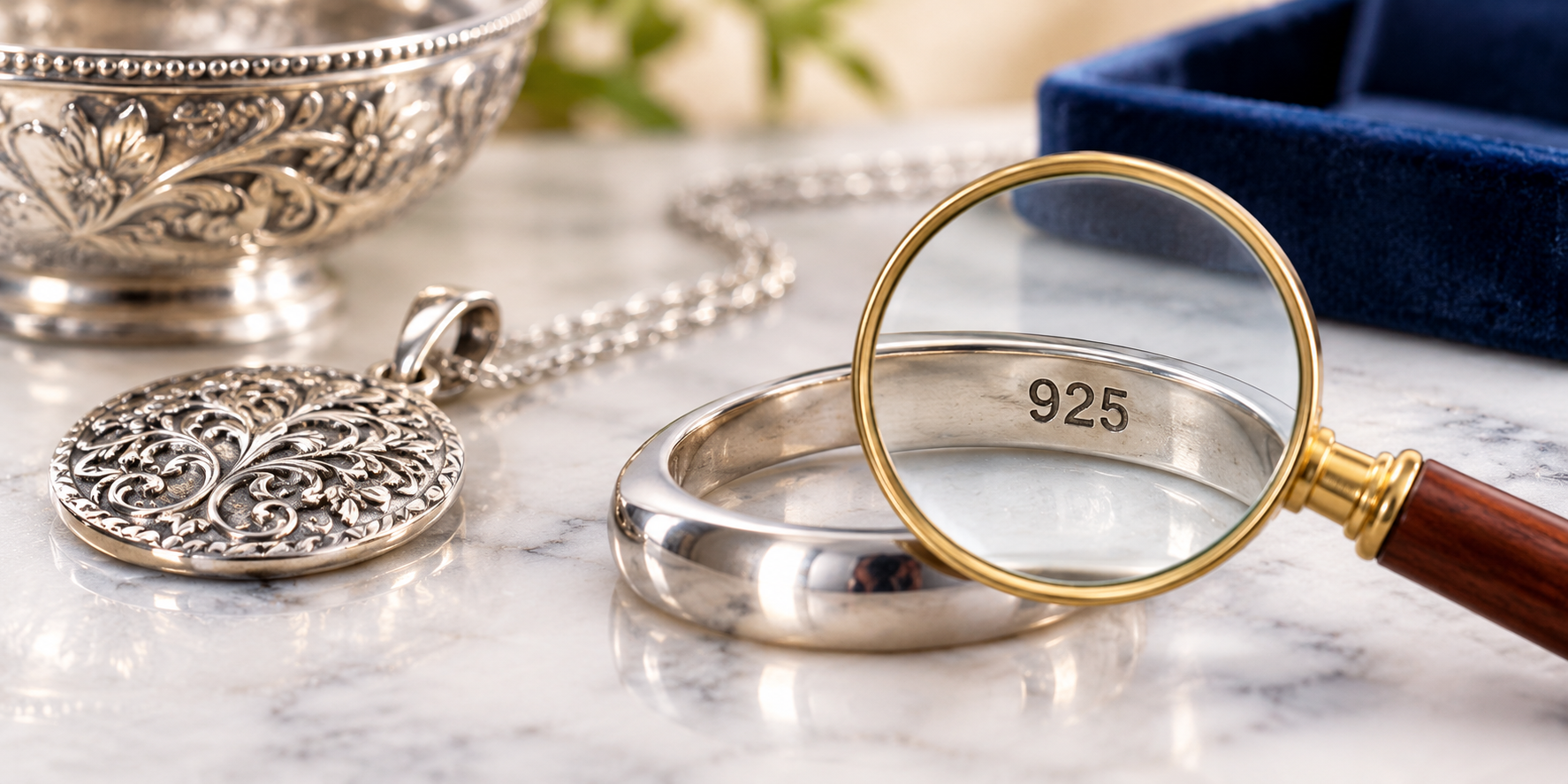
Start by checking the section of the ring band near the clasp or the end of the chain. Sterling silver is usually marked '925', 'Sterling', or 'STER', while white gold is generally stamped with a karat designation such as 10K, 14K, or 18K, or with a number like 417, 585, or 750.
The markings can be tiny, so use a jeweler's loupe or your phone's zoom feature to read them clearly. Keep in mind that older pieces may have worn or faded stamps.
Marks such as “GP” or “GEP” indicate gold plating over another metal rather than solid white gold.
Compare Color and Tarnish
Sterling silver generally has a bright, slightly warm white look, though it may eventually turn grey or black in places, especially in small crevices. White gold doesn't tarnish the same way, though its rhodium coating can wear off and reveal the slightly warmer, champagne-colored metal underneath.
If dark patches come off with a soft polishing cloth, the piece may be sterling silver. Black residue on the cloth is another clue that silver tarnish is present.
Test Weight and Magnetism
Since gold is denser than silver, a white gold ornament of the same size will usually feel heavier than a sterling silver one. You can detect the difference by comparing two similar rings.
A magnet might provide a further indication. Ordinary white gold and sterling silver are not generally magnetic. Therefore, if a strong magnet attracts the item, it may contain a magnetic base metal.
Durability, Upkeep and Skin Reaction
White gold is generally harder than sterling silver, making it an ideal choice for everyday jewelry. This is one reason it is commonly used for engagement and wedding bands. Sterling silver is softer and more likely to scratch or bend, so people often choose it for pendants and bracelets.
The two metals also need different levels of care. Sterling silver requires regular polishing to manage tarnish, while white gold may need rhodium replating every few years to maintain its bright finish.
Skin sensitivity is another consideration. Some white gold alloys contain nickel, and the copper in sterling silver can also cause problems for some people. If you have sensitive skin, check the alloy's composition before purchasing or wearing a piece regularly.
When a Professional Test Makes Sense
Home tests can be deceptive, especially with plated jewelry, mixed-metal pieces, or items worn for a long time. Professional testing gives a clearer indication of the materials it contains.
Pacific Precious Metals is a Bay Area dealer with stores in Sausalito, Palo Alto, Fremont, and Walnut Creek. Its in-store evaluations consider purity, weight, and current spot prices.
If you want to sell gold and silver jewelry, you can start by having your pieces evaluated. For insurance or estate-related valuations, consider a jewelry appraisal service.
How Value Differs When You Sell
When it comes to resale value, metal content matters more than appearance; white gold tends to have a higher metal value because it contains gold, while sterling silver is valued based on its silver content.
When it comes to these metals, customers consider purity, weight, and the current spot price; in some cases, design or the manufacturer may also matter. Gemstones, clasps, and other parts can add to the total weight without contributing the same value in precious metal. So the figure on a scale alone might not reflect what your jewelry is worth.
Bringing the piece and a valid photo ID to a dealer is a common first step when you want to sell.
Frequently Asked Questions
How can you tell sterling silver from white gold quickly?
On silver, look for a 925 or Sterling mark; on white gold, look for a 10K, 14K, or 18K mark. You can also compare the weight and check for tarnish. White gold is usually denser and doesn't tarnish like sterling silver, but these signs alone can't confirm the metal.
Does white gold tarnish like sterling silver?
No. White gold does not tarnish like sterling silver. However, its rhodium coating can wear away over time, revealing a warmer tone beneath.
Which one is worth more when sold?
White gold generally has more metal value because it contains gold. The final offer depends on its purity, weight, and the current spot price. Sterling silver's value is based primarily on its silver content.
Where can you get jewelry tested in the Bay Area?
Pacific Precious Metals evaluates jewelry at its Sausalito, Palo Alto, Fremont, and Walnut Creek locations. The business buys, sells, and appraises precious metals and jewelry.
Telling the Two Metals Apart
You can use the jewelry's hallmarks, color, weight, and signs of wear to identify it; sterling silver is typically softer, tarnishes, and is usually marked 925, while white gold is a gold alloy that is generally harder and denser and is marked with its karat.
If you still cannot determine which metal you have, professional testing can provide a more reliable answer. Pacific Precious Metals offers in-person evaluations to help you understand your jewelry's composition before you decide whether to keep or sell it.
Disclaimer: This content is provided by Pacific Precious Metals for educational purposes only and is not financial or tax advice. Please consult a licensed advisor before making financial decisions.