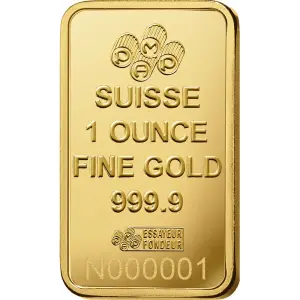
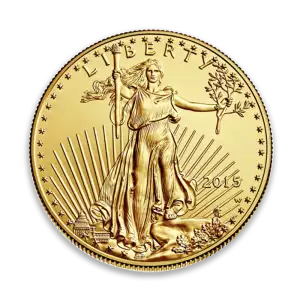
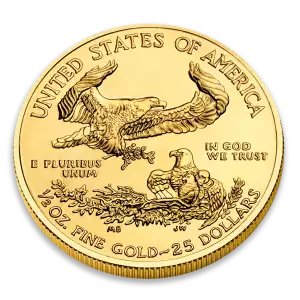
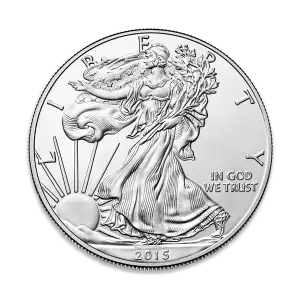
Gold’s journey throughout 2025 was certainly a significant thing to watch. Surging over 50%, smashing through the $5,000 per ounce mark like it was nothing! But notable momentum rarely fades quietly. That historic run brought serious whiplash, and that volatility has heavily bled into the early months of this year. After such a dramatic climb, everyone is sitting on the edge of their seats.
What will gold prices do in 2026, and what should investors expect? It’s the ultimate question.
The financial landscape is shifting at lightning speed, and making sense of the noise is exhausting. In this blog, we’re breaking down the gold price forecast for 2026. We’ll cover where prices stand, what the big banks are predicting, what is driving the market, and whether buying right now still makes sense.
Where Gold Prices Stand Heading Into 2026
To understand where we’re going, we first have to look at where we are. Gold hit a staggering all-time high of roughly $5,596 per ounce in late January 2026. This peak was the record level, followed by a multi-year bull run. Countless factors, such as tariff uncertainty, massive central bank demand, and heavy demand for ETFs, made it feel as if the rally was completely unstoppable.
But markets always need to breathe, and gold took a sharp one. Prices corrected aggressively after that January peak, tumbling below $4,300 by late March, a drop of over 22% from the highs. Seeing your portfolio take a dip can trigger panic, but here is the truth: this level of volatility is entirely normal for commodities. Your focus needs to remain firmly on the long-term structural trend, not the daily emotional rollercoaster.
Gold Price Forecast 2026: What the Major Banks Are Saying
When you look at the gold price forecast 2026, you'll notice institutional targets are all over the map. That massive spread is actually newsworthy, reflecting the deep-seated uncertainty gripping broader financial markets. On the highly optimistic side, J.P. Morgan expects gold to average $5,055 per ounce by the fourth quarter.
They aren't mincing words, confidently calling it their "highest conviction long" for the year. Goldman Sachs isn't far behind, projecting a climb to $4,900 by December based on anticipated Fed rate cuts and Western ETF inflows. Bank of America even upgraded its forecast to a solid $5,000.
But the room isn't entirely bullish. More cautious voices, such as HSBC, are forecasting a much lower average of $ 5,000. Deutsche Bank sits quietly at $4,450, taking a highly conservative stance on current volatility. Conversely, some bold analysts at BNP Paribas suggest gold could even test an astronomical $6,000.
The ultimate takeaway? Consensus leans heavily bullish, but nobody expects a straight line up.
What's Driving Gold Price Trends in 2026
What is driving gold price trends in 2026? It boils down to four undeniable catalysts.
Central Bank Buying
First is the central bank buying. This is the heavyweight champion of the gold market. Global central bank demand is projected to average 585 tonnes per quarter this year. These massive institutions have increased their buying roughly fivefold since 2022.
Global de-dollarisation is no longer a fringe theory; it is a permanent, structural shift that provides a massive floor for prices.
Federal Reserve Policy and Real Yields
Goldman Sachs is betting on 100 basis points of rate cuts through 2026. This action compresses real yields down to levels that historically guarantee strong gold performance. Simply put, lower interest rates mean holding non-yielding gold hurts your portfolio less, making it a highly attractive asset.
Geopolitical Uncertainty
There’s always the shadow of geopolitical uncertainty that floats around. The world feels incredibly tense right now. Ongoing global conflicts, trade disputes, and lingering inflationary fears are keeping demand red-hot. When the world feels shaky, nervous investors naturally flock to the oldest, most reliable form of money.
ETF Inflows and Retail Demand
Finally, we can't ignore retail demand. Every day, investors are aggressively joining the party. J.P. Morgan forecasts 250 tonnes of ETF inflows this year, while global bar and coin demand is set to easily surpass 1,200 tonnes. Accessible entry points, from fractional bars to ETFs, are driving massive retail participation worldwide.
Together, these forces are shaping a powerful backdrop for gold, one driven not by hype, but by deep, structural shifts in the global economy.

Will Gold Go Up or Down in 2026?
Everyone wants a crystal ball. But when asked whether gold will go up or down in 2026, we have to be brutally honest. Short-term direction is totally unpredictable. The long-term structural picture, however, is crystal clear. The primary bull case relies on continued Central Bank accumulation, aggressive rate cuts, and unavoidable geopolitical flare-ups. If those dominoes fall, gold could easily blow past current targets.
The biggest downside risk is a scenario where central banks suddenly halt their massive purchases, or a surging US dollar crushes commodity momentum.
Despite these risks, the institutional consensus holds tight to a specific technical boundary. If gold simply maintains support above $4,200, the broader bullish market structure remains entirely intact. Stop trying to perfectly time the market. Focus on smart position sizing and a long-term mindset instead.
Is 2026 a Good Year to Buy Gold?

With all this wild volatility, is 2026 a good year to buy gold? Let’s start with the basics: set realistic expectations. You must acknowledge that prices are significantly higher than they were just two years ago. However, gold enters 2026 heavily backed by declining real yields, reckless government deficit spending, and unshakeable central bank demand. Because of these foundational pillars, the macroeconomic case for owning gold hasn't weakened.
This is exactly where a dollar-cost averaging strategy becomes your absolute best friend. Buying your gold gradually over time drastically reduces your inherent timing risk. It prevents you from dumping all your capital at a temporary market peak.
Remember gold's true purpose in a diversified portfolio. It is an elite inflation hedge, a defence against currency devaluation, and a safety net against stock market crashes. Whether you prefer the convenience of coins or the bulk of bars, physical gold is a wealth preservation tool, not a get-rich-quick scheme.
Invest In Gold With Pacific Precious Metals
To wrap up, 2026 is shaping up to be another active, historically significant year for precious metals. The world's major financial institutions remain resoundingly bullish, and the core macroeconomic drivers are beautifully intact. Just remember that short-term price volatility is a persistent reality you will have to navigate.
Whether you are a hesitant first-time buyer or an experienced stacker adding to your vault, physical gold offers the ultimate peace of mind. Browse Pacific Precious Metals' premium gold bullion selection online today, or contact us for a personalized consultation.
Disclaimer: This content is for informational purposes only and should not be considered financial, investment, or trading advice. Market conditions can change rapidly, and past performance is not indicative of future results. Always conduct your own research or consult with a qualified financial professional before making investment decisions.