A gold crown from an old dental visit or an estate drawer may look small, but it can still have real metal value. How much is a gold tooth worth? The answer depends on weight, gold content, and the other metals mixed into the alloy. Dental gold is rarely pure, so the color tells you very little. This guide explains what dental gold is made of, how buyers calculate its value, and what to do before selling a crown, bridge, or cap.
What Is a Gold Tooth Actually Made Of?
Dental gold is an alloy (a mixture of metals). Pure 24k gold is far too soft to be practical in a dental prosthesis, so for many years the dental profession has used harder alloys. Gold is the primary metal in the alloy and is often combined with platinum, palladium, silver and copper. Other metals may be added in small quantities to improve strength, color, or wear resistance. Two crowns that look identical can contain very different amounts of gold, so the crown's weight tells you nothing.
Dental Gold Classes: High Noble, Noble, and Base Metal
The American Dental Association groups dental casting alloys by how much noble metal they hold. Noble metals include gold, platinum, and palladium.
High Noble: at least 60% noble metal, with at least 40% gold.
Noble: at least 25% noble metal.
Predominantly Base Metal: less than 25% noble metal.
Only the first two groups are likely to have real precious-metal value, and some noble alloys are actually palladium-based rather than gold-based. A base-metal crown can still look yellow, so testing is essential before you conclude it contains gold.
How Much Is a Gold Tooth Worth? The Basic Formula
Buyers value dental gold based on metal content, not appearance. The formula is weight x purity x the gold spot price. If a crown is 2 grams and the alloy is 60% gold, then it contains 1.2 grams of pure gold (2 x 0.60). The buyer then takes that 1.2 grams and multiplies it by the spot price of gold. Refining costs will then be deducted. Palladium and platinum add value on top of gold. As every alloy is different, a metal test is a far better guide than an estimate.
What Changes the Value of Dental Gold
Several details move the value of a gold tooth up or down:
Weight of the Metal: Heavier pieces hold more metal, but porcelain and leftover tooth add weight with no value.
Gold Percentage: A higher gold share means more value per gram.
Palladium and Platinum: These metals appear in many dental alloys and carry their own value.
Spot Price On the Sale Date: Metal markets move, so the same crown can bring different amounts on different days.
Testing Method: Accurate testing keeps the calculation tied to what the piece actually contains.
Types of Gold Teeth and How Their Value Differs
Not every gold tooth is the same, and that changes how it is valued.
Dental Crowns, Bridges, and Caps
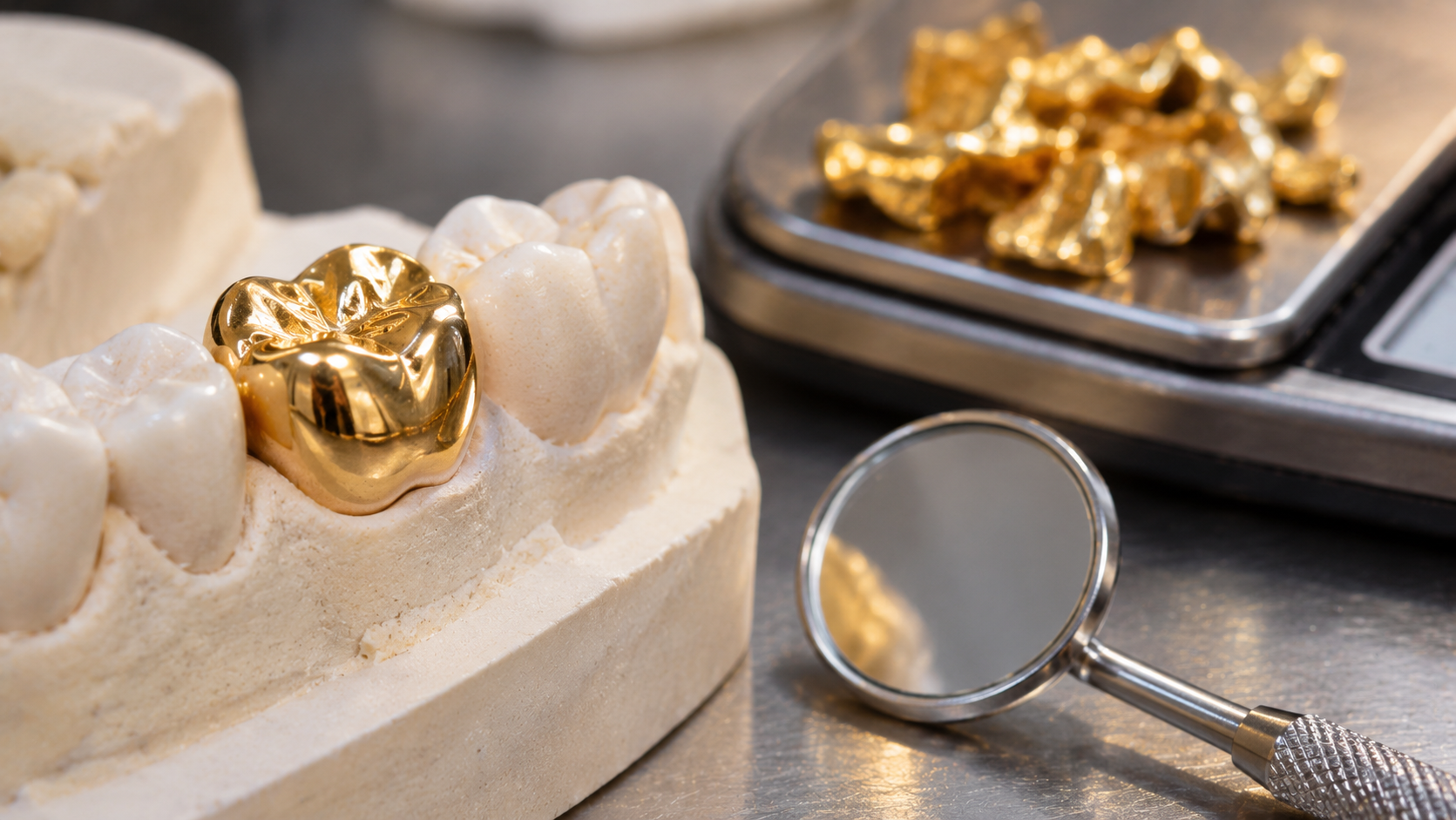
Dentists make them from casting alloys. Many are porcelain-fused-to-metal, so only the metal base is valuable. Solid metal crowns are easier to value than the porcelain ones, as there's less material to separate. Value is set by weight and alloy test results.
Decorative Gold Fronts and Grills
These are often made like jewelry, with stamps such as 10k or 14k. Karat purity affects value in the same way here. Gold-plated pieces contain very little gold, so testing is the only reliable check.
How to Tell If a Tooth Is Real Gold
Dental gold will rarely have a karat stamp, and color is a poor guide, as copper, silver, and palladium can significantly affect it. A magnet will not help either, as gold is non-magnetic, but so are a number of other metals. Scratch tests and acid tests can also damage the piece and won't necessarily give you a clear answer. XRF is more reliable because it tells you what metals are in the piece and what percentage of each, without any cutting or melting.
How Pacific Precious Metals Buys Dental Gold
Pacific Precious Metals lists dental gold on its Cash for Gold page, next to jewelry, flatware, and industrial precious metals. The company buys gold crowns, bridges, and caps, and it pays for both gold and palladium in dental scrap. Payment options include cash, check, bank wire, or bullion. In the San Francisco Bay Area, the company can x-ray dental gold and pay on site, or refine it off site. It says off-site refining should give a more accurate assay, with a turnaround of 1 to 3 days.
How to Prepare Gold Teeth Before Selling
A little preparation makes the value easier to see and the sale easier to follow:
Keep each piece separate, so every weight and test result matches the right item.
Skip harsh cleaners and scratch tests, which can damage the metal.
Note whether porcelain is still attached, since it changes the weight.
Bring any paperwork from the dentist, since it may name the alloy used.
Ask the buyer to explain how the piece is tested, weighed, and priced.
Compare the explanation as well as the final number.
Frequently Asked Questions
Is a gold tooth worth money?
Yes, if it holds enough gold, palladium, or platinum. Value depends on weight and metal content, not on how yellow the crown looks. A test shows which case applies to a given piece.
Is dental gold pure gold?
Dental gold is an alloy that mixes gold with metals such as platinum, palladium, silver, and copper. The exact mix changes from one crown to the next.
Do buyers pay for the porcelain or tooth?
No. Buyers pay for precious metal content. Porcelain and tooth material have no metal value, so weighing and testing must account for them.
Can a magnet show if a tooth is gold?
No. Gold is not magnetic, but many other metals aren't either. Metal testing gives the real answer.
Getting a Clear Answer on Gold Tooth Value
The answer to how much is a gold tooth worth comes down to three facts: how much the metal weighs, how much of it is gold, and what the market pays for that gold on the sale date. Testing turns those facts into a number. Before selling crowns, bridges, or caps, keep the pieces separate, ask how the buyer tests them, and ask them to explain the math in plain terms. A buyer who answers those questions clearly makes the sale easier to follow.
Disclaimer: This content is provided by Pacific Precious Metals for educational purposes only and is not financial or tax advice. Precious metals carry risk, including possible loss of principal, so please consult a licensed advisor before investing.